Why Your Toddler Is Suddenly Fighting Sleep Like It's Their Full-Time Job

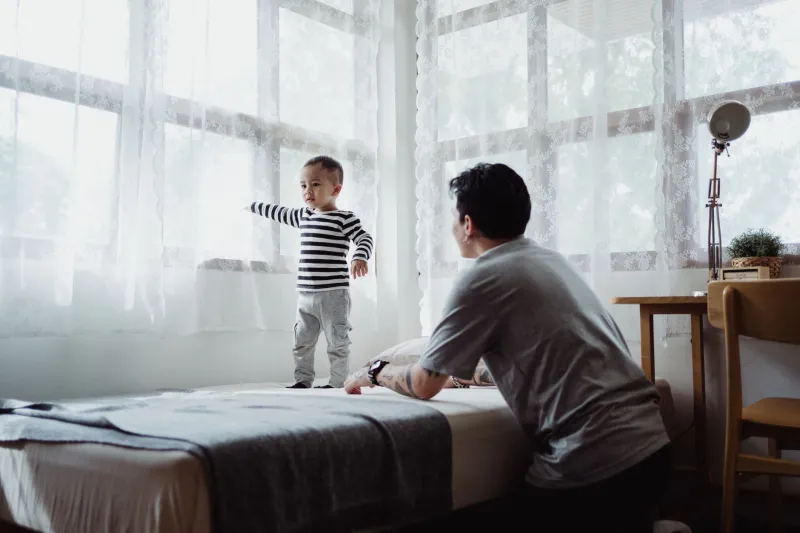
It starts innocently enough. One day your toddler decides that lying down is optional, eye contact with the ceiling is fascinating, and absolutely nothing about nap time is acceptable. You've done everything right — the dim room, the white noise, the lovey that's been washed exactly once because washing it more often feels like a gamble. And yet, there they are: standing in the crib like a tiny protester with a very strong agenda.
Here's the thing most parenting content won't tell you upfront: the nap time rebellion is, in many cases, not a problem to be solved. It's a signal worth reading.
What's Actually Happening in That Little Brain
Between the ages of two and four, children go through some of the most significant neurological reorganization of their early lives. The prefrontal cortex — the part of the brain responsible for impulse control, decision-making, and emotional regulation — is under active construction. And one of the clearest expressions of that development? A sudden, fierce need to assert control over their own body and schedule.
Dr. research in developmental pediatrics consistently shows that resistance to sleep often spikes during periods of rapid cognitive growth. When children are learning new skills — language explosion, social awareness, early problem-solving — their brains are essentially running hot. The idea of shutting all that down for ninety minutes can feel, to a toddler, genuinely threatening to their sense of forward momentum.
This isn't defiance for its own sake. It's autonomy seeking — and it's healthy.
The Difference Between Developmental Pushback and an Actual Sleep Issue
This distinction matters, and it's worth sitting with for a minute.
Developmental pushback typically looks like:
- Resistance at the start of nap time, followed by falling asleep relatively quickly once conditions are met
- Protests that are more theatrical than distressed
- A child who still seems tired (rubbing eyes, slowing down, getting clumsy)
- Sleep resistance that coincides with hitting a new milestone — new words, new physical skills, a recent social shift like starting preschool
An actual sleep issue might look more like:
- Genuine inability to settle even after 45 minutes to an hour
- A child who seems wired, not tired — heart rate up, eyes bright, no yawning
- Consistent night waking alongside nap refusal
- Behavioral dysregulation that persists well past the nap window
If you're seeing the first set of signs, you're probably in developmental territory. If you're seeing the second, it's worth a conversation with your pediatrician — not because something is catastrophically wrong, but because underlying factors like sleep apnea, sensory sensitivities, or even nutritional gaps can sometimes play a role.
The Independence Factor
Around age two, children begin developing what psychologists call a "sense of self" — a recognition that they are a separate person with their own preferences and agency. This is enormous developmental news. It's also the reason your previously compliant napper is now telling you, with great conviction, that they are "not tired" while barely keeping their eyelids open.
The mistake many parents make is treating this assertion as a lie to be corrected. It's not. From your child's perspective, they genuinely feel that lying down means giving up control — and that feels scarier than the tiredness itself.
One practical workaround: offer structured choice within the nap routine. "Do you want to bring the bunny or the bear to rest time?" gives your child agency without dismantling the routine itself. It sounds small, but the research on autonomy-supportive parenting suggests that even minor choices can significantly reduce resistance behaviors in toddlers.
What the Science Says About Skipping Naps Early
Here's where it gets important for parents who are tempted to just... let go of nap time when the resistance starts.
A widely cited study from the University of Colorado found that toddlers who missed naps showed significantly higher levels of anxiety and lower positive emotional responses — effects that persisted into the evening, long after the missed nap window closed. The brain doesn't just catch up on its own. Sleep debt in young children accumulates differently than in adults, and the behavioral fallout tends to show up in the late afternoon, right around the time you're trying to make dinner.
The American Academy of Pediatrics notes that most children need naps until at least age three, with many benefiting from some form of daytime rest through age five. The resistance doesn't mean the need has disappeared. It means your child's brain is developing — and it still needs the rest to keep doing that.
Strategies That Actually Work (Without the Standoff)
Once you've determined you're dealing with developmental pushback rather than a genuine sleep issue, there are a few approaches that tend to work better than a straight-up battle of wills.
Reframe the language. "Nap time" carries baggage for some kids. "Rest time" or "quiet time" can lower the stakes without eliminating the rest. You're not tricking them — you're meeting them where they are developmentally.
Build a consistent wind-down sequence. The transition to rest matters more than most parents realize. A five-to-ten minute pre-nap ritual — same order, same activities every day — helps the brain shift gears. It doesn't have to be elaborate. Two books, a song, lights down. Repetition is the point.
Accept that some naps will look different. A child who lies quietly with a book for thirty minutes and then falls asleep is still getting rest. A child who takes twenty minutes to settle and then sleeps forty-five is still meeting their biological need. Perfection is not the metric here.
Watch the wake window. Overtiredness is one of the sneakiest nap-wreckers out there. If your child is already past the point of manageable tiredness when nap time starts, the cortisol spike that comes with exhaustion can make falling asleep genuinely harder. Most toddlers do best with nap time starting about four to five hours after waking.
The Bottom Line
Your kid fighting nap time doesn't mean you've failed, and it doesn't necessarily mean naps are over. It often means their brain is doing exactly what it's supposed to do at this stage — pushing against limits, asserting selfhood, and figuring out how the world works.
Your job isn't to win the standoff. It's to hold the structure loosely enough that rest can still happen inside it. That's a harder skill than it sounds, and most days it'll feel like you're improvising. You probably are. That's okay.
The nap time rebellion is temporary. The developmental growth driving it is not.