When 'I'm Not Tired!' Is Actually a Growth Announcement
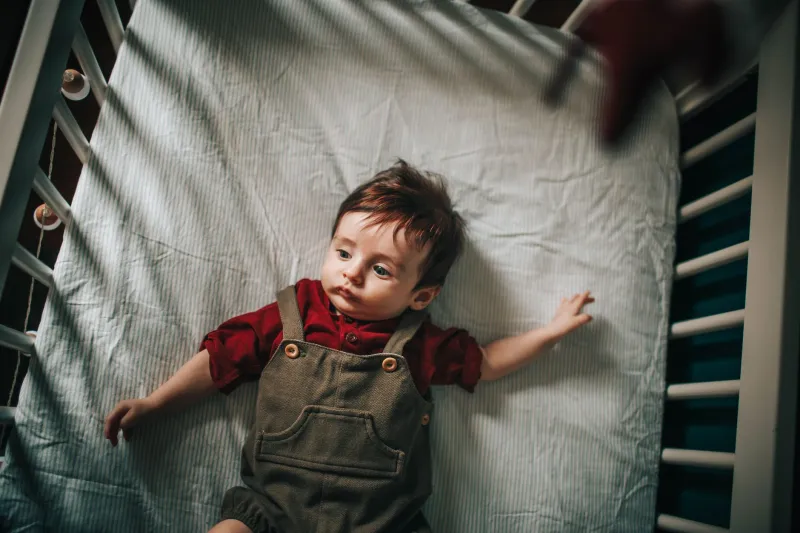
It happens with almost no warning. One week, your child drifts off within minutes of hitting the pillow. The next, they're standing at the edge of their bed like a tiny attorney, building a case for why nap time is fundamentally unjust. If you've lived this, you know how quickly it can spiral from mildly frustrating to completely exhausting.
Here's what nobody tells you upfront: that resistance is often less about sleep and more about growth. Which doesn't make the 2 p.m. standoff any easier, but it does make it a lot easier to understand.
The Brain Is Doing Something Big Right Now
Around certain developmental windows — typically between ages two and five — children experience significant leaps in cognitive awareness. They're building a stronger sense of self, testing cause and effect in their relationships, and starting to understand that they have preferences that are separate from yours. That last part is huge.
When a toddler or preschooler pushes back on nap time, they're often exercising one of the first tools of autonomy they've discovered: the word no. It's not defiance for its own sake. It's practice. They're learning that their voice has weight, that they can influence their environment, and that their inner experience — including whether they feel tired — is real and worth communicating.
So yes, in a very literal sense, "I don't want to nap" can be a developmental announcement. It's just delivered at the worst possible time of day.
Age-by-Age: What the Resistance Actually Looks Like
Around 18 months to 2 years: Resistance at this stage is usually physical — the arched back, the sudden boneless flop to the floor, the crying that sounds like the end of the world. These kids still need sleep desperately, but they're also discovering that their feelings matter. The pushback here is almost always about the transition itself, not the nap. They don't want to stop what they're doing. The fix is rarely about changing the nap — it's about building a better bridge to it.
Ages 2 to 3: This is peak nap negotiation territory. Kids this age are verbal enough to argue but not yet logical enough to be reasoned with in any satisfying way. They'll tell you they're not tired right before falling asleep mid-sentence. The resistance here is partly cognitive — they genuinely can't always read their own fatigue signals accurately — and partly social, because they want to be where the action is. Missing out feels like a real loss to them.
Ages 3 to 4: Here's where things get genuinely complicated. Some kids this age are legitimately beginning to outgrow the nap. Others still need it badly but are fighting it because independence is intoxicating. The challenge for parents is figuring out which situation they're actually in. A child who skips the nap and makes it to bedtime without melting down is probably showing you something real. A child who skips it and turns into a four-alarm disaster by 4:30 p.m.? Still needs the sleep, just doesn't know it yet.
Ages 4 to 5: By this point, many children have naturally phased out of napping, and pushing a formal nap can actually create more conflict than it solves. What still works — and what many pediatric sleep experts support — is a structured quiet time. Rest without pressure to sleep. More on that in a minute.
What Resistance Is Telling You (vs. What It Isn't)
It's worth separating two very different things that can look identical on the surface.
Typical developmental pushback tends to be consistent, tied to a specific age window, and doesn't dramatically affect your child's overall mood or functioning when the nap is occasionally skipped. It's annoying, but it's survivable.
A genuine shift in sleep needs looks different. If your child is regularly taking a long time to fall asleep at nap time, waking early from naps, struggling to fall asleep at night because of the nap, and still functioning reasonably well without it — those are signals worth paying attention to. Their body might actually be ready to restructure.
But here's the thing: even when the nap goes away, the rest doesn't have to. And that distinction matters a lot.
Why Quiet Time Deserves More Credit
There's a version of the afternoon that doesn't require your child to sleep but still gives both of you a genuine reset. Quiet time — a contained, calm period where your child rests in their room with books, a simple puzzle, or a soft toy — pulls more weight than most parents realize.
For kids, it's a chance to decompress from the sensory overload of the morning. For parents, it's fifteen minutes to thirty minutes of something approaching silence. Nobody has to be unconscious for it to count.
The transition to quiet time also tends to go smoother than the transition away from napping, because you're not taking something away entirely — you're reshaping it. That framing matters to kids who are in the thick of their independence phase.
A Framework for Reading the Room
Instead of treating every nap refusal as either a battle to win or a schedule to abandon, try thinking of it as information. Ask yourself a few things:
- How is my child functioning in the late afternoon? Consistent meltdowns are a pretty reliable sign that rest is still needed.
- How long has this resistance been happening? A week of pushback is different from three months of it.
- Is bedtime getting harder? If naps are suddenly making nighttime sleep worse, that's a real signal.
- What changed recently? A new sibling, starting preschool, a move — any of these can temporarily disrupt sleep patterns without meaning the nap era is over.
None of this means you have to solve it all today. Development moves in waves, and so does sleep. What works this month might need adjusting next month, and that's not a failure on your part — it's just how kids grow.
The Bigger Picture
Parenting through the nap years involves a lot of holding two things at once: your child's need for rest and their very real, very valid drive toward independence. Those two things are going to collide sometimes, usually right around 1 p.m.
But when you can zoom out and see the resistance as part of a bigger story — one where your kid is becoming more themselves, more aware, more capable — it changes the texture of the afternoon a little. It doesn't make it quieter. But it might make it feel a little less like a war and a little more like what it actually is: a kid growing up, one loud protest at a time.