Sound Asleep: Rethinking What Your Child Actually Hears at Nap Time
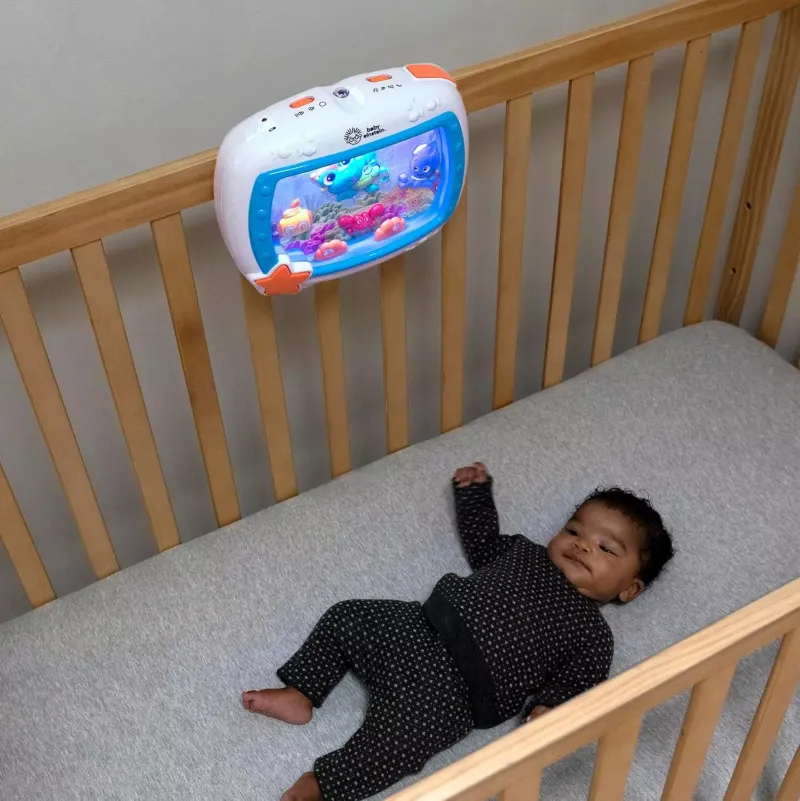
Photo: toddler sleeping peacefully in crib with sound machine nursery soft light, via www.planerium.com
If you've been running the same white noise machine every nap since your kid was a newborn, first of all — no judgment. White noise works. It masks household sounds, creates a consistent auditory cue for sleep, and has decades of pediatric endorsement behind it. But if you've ever wondered whether there's something better out there — or something your child might actually respond to more deeply — the answer is a pretty enthusiastic yes.
The science of sleep audio has expanded significantly in the last ten years, and researchers are now looking at a much wider range of sounds than the classic static hiss. What they're finding is genuinely fascinating for parents of young children.
Why Sound Matters More Than You Might Think
Human brains don't go fully offline during sleep. The auditory cortex remains active, processing sounds from the environment and — crucially — deciding whether those sounds represent a threat worth waking up for. This is why a car alarm two blocks away can jolt you awake while your partner sleeps through it. Your brain is constantly making judgment calls.
For young children, whose nervous systems are still developing, this auditory processing is especially sensitive. The right sound environment can help the brain settle into deeper, more restorative sleep stages. The wrong one — think unpredictable noise, sudden silences, or sounds the brain flags as attention-worthy — can fragment sleep cycles and leave your kid waking up cranky and under-rested.
This is where intentional sound design for nap time starts to make a lot of sense.
White Noise: Still Good, But Not the Whole Story
Let's give white noise its due. It works primarily through a mechanism called "sound masking" — essentially flooding the auditory field with a consistent, neutral signal that drowns out variable environmental noise. A dog barking, a sibling slamming a door, a garbage truck on the street — white noise blurs these into the background.
But white noise is, by definition, all frequencies at equal intensity. That's great for masking, but it's not particularly restful in a deeper neurological sense. It doesn't actively encourage relaxation. It just prevents disruption.
That's why researchers and sleep specialists have started exploring what happens when you replace — or supplement — white noise with sounds that do more than mask. Sounds that actively nudge the brain toward calm.
Nature Sounds: The Case for Going Outside (Acoustically Speaking)
There's a reason so many sleep apps default to rain sounds or ocean waves when you go looking for something beyond static. Nature-based audio has a solid and growing body of research behind it.
A 2021 study from the Max Planck Institute found that listening to nature sounds reduced activity in the brain's default mode network — the part associated with internal mental chatter and stress — more effectively than artificial sounds. For adults, that translated to measurable reductions in cortisol. Researchers believe similar mechanisms are at play in young children, whose brains are acutely responsive to environmental cues.
The key is predictable variation. Rain sounds work partly because they vary slightly — they're not perfectly uniform like white noise — but they vary in a pattern the brain quickly learns is non-threatening. The same goes for ocean waves, forest ambience (birds, wind, rustling leaves), and flowing water.
Good options to try:
- Steady rainfall without thunder
- Gentle ocean waves with a consistent rhythm
- Forest ambience (light birdsong, soft wind — avoid anything with sudden loud bird calls)
- A babbling brook or small waterfall
Avoid nature sounds with dramatic variation — distant thunder, loud wind gusts, or sudden animal calls. The brain will flag those as worth investigating, which is the opposite of what you want.
Instrumental Music: Slow, Simple, and Surprisingly Powerful
Music for sleep is a more nuanced territory, because not all music is created equal when it comes to rest. Upbeat, complex, or lyrically-driven music tends to engage the brain rather than soothe it. But slow, simple instrumental music — particularly in the 60-80 beats per minute range — has been shown to sync with the body's natural rhythms in ways that encourage relaxation.
Researchers at Stanford University found that musical phrases with a tempo around 60 BPM can help synchronize brainwave activity with the music's rhythm, nudging the brain toward slower, more restful states. This is sometimes called "entrainment," and while the research in young children is still developing, pediatric sleep specialists increasingly recommend slow instrumental music as a valid nap-time option for toddlers and preschoolers.
What works well:
- Classical lullaby arrangements (think Debussy, not Beethoven's 5th)
- Gentle acoustic guitar or piano
- Ambient instrumental music without sudden dynamic shifts
- Curated "sleep music" playlists designed specifically for children
Spotify and Apple Music both have solid curated playlists in this space — search "toddler sleep music" or "lullaby instrumental" and preview a few tracks before committing to a full nap-time playlist.
Binaural Beats: Real Science or Hype?
Binaural beats are where things get a little more technical — and where you'll also encounter the most marketing noise. Here's the straightforward version: binaural beats work by playing two slightly different frequencies in each ear simultaneously. The brain perceives the difference between those frequencies as a third tone, which can theoretically encourage brainwave activity to sync with that frequency.
Delta waves (0.5–4 Hz) are associated with deep sleep. Theta waves (4–8 Hz) are linked to light sleep and drowsiness. In theory, binaural beats in these ranges could help guide a child's brain toward sleep.
The research on binaural beats in children specifically is still limited, and most of the stronger studies have been conducted with adults. That said, several pediatric sleep researchers have noted that low-frequency binaural beats appear safe for children and may be worth experimenting with, particularly for kids who struggle to settle.
Important caveats: Binaural beats require headphones to work properly — each ear needs to receive a different frequency. Headphones are generally not recommended for children under three during sleep. For toddlers, some parents use speakers positioned on either side of the sleep space to approximate the effect, though this is less precise.
For preschool-age kids and older, apps like Brain.fm and Calm offer binaural beat tracks designed for sleep. Start with shorter sessions to see how your child responds.
Troubleshooting Common Acoustic Problems
The house is too loud during nap time. Start with sound masking (white or pink noise) to create a consistent baseline, then layer in a nature soundscape on top at a slightly lower volume. The masking layer handles disruption; the nature layer handles relaxation.
Your child wakes up the moment the sound stops. This is actually a common issue with apps that have sleep timers. Try setting audio to loop continuously through the full nap rather than fading out. Abrupt silence can trigger waking just as reliably as sudden noise.
The sound machine doesn't seem to be doing anything anymore. Kids can habituate to the same sound over time. Try rotating between two or three different soundscapes across the week to keep the auditory environment feeling fresh without being stimulating.
Neighbors, traffic, or construction are making consistent masking impossible. Consider moving your child's nap space temporarily, or double up on sound sources — a sound machine near the door and a softer nature track closer to the sleep space can create a more effective buffer.
Apps and Devices Worth Trying
- Hatch Rest+ — A solid all-in-one option with a wide library of sounds and the ability to set custom routines. Great for toddlers and preschoolers.
- Calm Kids — Offers guided rest content alongside sleep soundscapes; good for kids who are transitioning away from naps but still need a quiet rest period.
- LectroFan — A dedicated sound machine (not an app) with a wide range of white, pink, and brown noise options plus fan sounds. Reliable and simple.
- Spotify "Sleep" and "Lullabies" categories — Free to access and surprisingly well-curated. Good for experimenting before investing in a dedicated device.
- Brain.fm — Best for older preschoolers; the binaural beat functionality requires headphones to work as intended.
The Bottom Line on Nap-Time Audio
White noise isn't going anywhere — and it shouldn't. But if nap time has been feeling like a battle lately, or if your child just doesn't seem to be settling as deeply as they used to, it might be worth experimenting with what they're actually hearing.
The right soundscape isn't a magic fix. But it is a real, research-supported variable that a lot of parents overlook. And in the nap-time equation, every variable counts.