That Tablet Is Still Running in Your Kid's Head Long After You've Put It Away
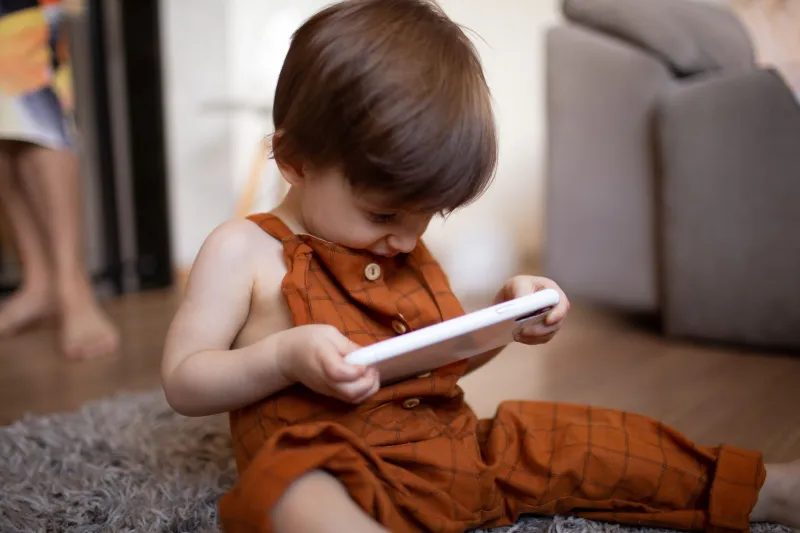
You've done everything right. You set a timer, gave a five-minute warning, and calmly took the tablet away before nap time. Your kid protested, you held firm, and now they're lying in bed staring at the ceiling like a tiny, furious insomniac. You're standing outside the door wondering what went wrong.
Here's the thing: you didn't do anything wrong. But the screen did.
The problem isn't just the device itself — it's the neurological hangover it leaves behind. And once you understand what's actually going on in your child's brain after screen time ends, the whole frustrating picture starts to make a lot more sense.
Your Kid's Brain on a Tablet
When a young child interacts with a screen — whether it's a fast-moving cartoon, a touch-based game, or even an educational app — their brain isn't passively receiving information. It's working hard. Dopamine, the neurotransmitter associated with reward and anticipation, gets released in small bursts every time something novel happens on screen. A new sound. A color change. A character popping up unexpectedly. For a toddler's developing brain, this is genuinely exciting stuff — and the brain responds accordingly, ratcheting up alertness and engagement.
That heightened state doesn't vanish the second the screen goes off. Think of it less like flipping a light switch and more like turning off a blender — the blades keep spinning for a while after the power cuts out. Research on pediatric sleep consistently points to the fact that young children need significantly more wind-down time after stimulating activities than adults do, and screens rank among the most neurologically activating things a small child can experience.
Add blue light into the equation and it gets even more complicated. Blue light — the specific wavelength emitted by tablets, phones, and TVs — signals to the brain that it's daytime. It suppresses melatonin production, the hormone that helps regulate sleep onset. For adults, even 30 minutes of evening screen exposure can delay melatonin release. For children, whose eyes transmit more blue light to the retina than adult eyes do, the effect is proportionally stronger. That means your kid isn't just mentally wound up — their body chemistry is actively working against rest.
The 20-Minute Myth
A lot of parents operate on a rough rule of thumb: turn off screens 15 to 20 minutes before nap time and you're probably fine. It feels reasonable. It's not quite enough.
Studies examining children's arousal levels after screen exposure suggest that the neurological activation from high-stimulation content can persist for 30 to 60 minutes — sometimes longer, depending on the child's age, temperament, and what they were watching or playing. Younger toddlers tend to take more time to regulate back down than preschoolers do, partly because their prefrontal cortex — the part of the brain responsible for emotional regulation and impulse control — is still very much under construction.
This isn't about your child being difficult or defiant. Their brain literally hasn't finished building the infrastructure needed to pump the brakes quickly. Expecting a two-year-old to transition from an action-packed tablet game to calm, restful sleep in under 20 minutes is a little like expecting a freight train to stop on a dime. The physics just aren't there yet.
What 'Overstimulation' Actually Looks Like
Parents often describe post-screen behavior as their kid acting "hyper" or "out of control," but overstimulation in young children can look a lot of different ways. Some kids get loud and bouncy. Others get weepy and irritable. Some become clingy; others push back hard against any kind of transition. All of these are signs that the nervous system is overloaded and struggling to downshift.
If your child seems almost unreachable after screen time — like they're operating on a frequency you can't quite tune into — that's not attitude. That's a dysregulated nervous system trying to find its footing. Understanding that distinction matters, because it changes how you respond. Frustration and power struggles tend to add fuel to an already-lit fire. What an overstimulated brain actually needs is time, calm, and the right environmental conditions to settle.
Practical Timing That Actually Works
So what does a realistic, workable screen cutoff look like? Here's a starting point:
Aim for a 45-to-60-minute buffer before nap time. Yes, that's longer than most families are currently doing. But building that window into your routine — even if it takes a week or two to adjust — pays off quickly in smoother, faster nap transitions.
Watch the content, not just the clock. A slow-paced nature documentary is not the same neurological event as an interactive game or a fast-cut cartoon. If your child has been watching something calm and relatively low-stimulation, you may be able to work with a slightly shorter buffer. High-stimulation content — think anything with rapid scene changes, surprise elements, or interactive rewards — warrants the full hour.
Create a transition ritual, not just a cutoff. The brain responds well to predictable sequences. After screens go off, move through two or three calming activities in the same order every day: maybe a short walk around the backyard, then a snack, then books in the bedroom. This sequence essentially trains the nervous system to anticipate rest, which makes the whole thing easier over time.
Dim the lights early. Since blue light suppresses melatonin, adjusting your home's lighting in the 30 minutes before nap time can help the body start its natural wind-down process. Closing blinds, switching to warmer-toned lamps, or simply moving to a quieter, lower-light room signals to your child's brain that the day is shifting gears.
Lower the noise floor. Screens aren't the only sensory input worth managing. After devices go off, try to reduce background noise as well — turn off the TV even if it's just on in the background, bring the energy of the household down a notch. The goal is a gradual sensory fade, not a sudden silence that feels jarring.
You're Not Banning Fun, You're Protecting Rest
None of this means screens are the enemy or that your child can never watch anything before nap time. It means timing matters more than most of us realize, and a little neurological awareness goes a long way.
When parents understand why the cutoff needs to happen — not just that it does — it becomes easier to hold the line without guilt and explain it to a frustrated preschooler in terms that actually land. "Your brain needs some quiet time to get ready for sleep" is more honest than "because I said so," and kids often respond to honesty better than we expect.
The tablet will be there after nap. The window for rest won't wait. And the good news is that once you find the right buffer and build it into your routine, you may find that nap time stops feeling like a battle — and starts feeling like something your kid's brain is actually ready for.