Quiet Time Is Actually Doing Something: The Surprising Way Forced Downtime Builds Braver Kids
Let's be honest. Most of us are just trying to get through nap time in one piece. You close the door, cross your fingers, and hope the next hour doesn't end in someone yelling about a sock being on the wrong foot. Surviving it feels like the win.
But here's what's actually happening on the other side of that door—something a lot of parents don't realize until way later, if ever: that stretch of quiet is building your kid. Not despite the boredom. Because of it.
The Part Nobody Talks About
When we talk about nap time, the conversation almost always centers on sleep—how much, how long, whether they're getting enough. And sure, that stuff matters. But for toddlers and preschoolers who are starting to resist actual sleep, the rest of rest time is where things get interesting.
Child development researchers have spent decades studying what happens when young children are left to manage unstructured, low-stimulation time on their own. What they keep finding is that this kind of downtime—what some call "quiet time" once the napping phase starts to fade—is a surprisingly rich training ground for self-regulation.
Self-regulation, if you're not familiar with the term in this context, is basically the ability to manage your own emotions, impulses, and behavior without someone else doing it for you. It's what lets a five-year-old wait their turn without melting down. It's what helps a seven-year-old push through frustration when a puzzle doesn't come together right away. It's a foundational skill, and it doesn't just appear. It gets built—in small, repetitive moments.
Rest hour is one of those moments, happening every single day.
Boredom Isn't the Enemy
American parenting culture has a complicated relationship with boredom. We're wired to fix it, fill it, schedule around it. The second a kid says "I'm bored," most of us are already mentally scanning for an activity, a snack, a screen—anything to resolve the discomfort.
But Dr. Stuart Brown, a researcher who has spent years studying play and its role in development, has noted that unstructured time—including the kind that feels boring—is where children develop internal resources. When kids aren't being entertained, they have to generate something from inside themselves. That process, however uncomfortable it feels in the moment, is exactly the kind of cognitive and emotional exercise that builds resilience.
Think of it this way: if your child's brain is always being handed the next thing, it never has to practice reaching for something on its own. Quiet time is the reach. Every day.
What Self-Soothing Actually Looks Like
You've probably seen it without naming it. Your two-year-old, stuck in the crib with a stuffed animal and some soft light, starts talking to herself. Running through a little narrative. Reorganizing her animals. Humming. That's not nothing—that's a child learning to regulate her own internal state without external input.
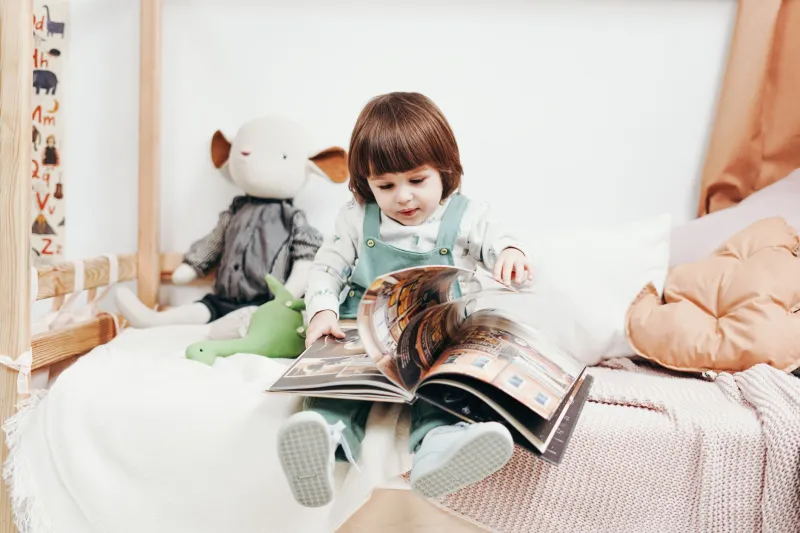
For older kids doing quiet time in their room instead of sleeping, the same process plays out differently. They might flip through books, build something with blocks, or just stare at the ceiling for a while before eventually landing on something that holds their attention. That transition—from restless to settled—is the skill. The activity they land on is almost beside the point.
Pediatric sleep consultant and child development educator Kim West has talked about how the ability to self-soothe during rest time transfers directly to a child's ability to handle transitions, frustrations, and even social conflict during waking hours. Kids who have regular practice sitting with their own discomfort, even briefly, tend to bounce back faster when things don't go their way.
The Confidence Connection
Here's where it gets a little counterintuitive: forced downtime builds confidence.
Not the kind of confidence that comes from being cheered on or told you did a great job. The quieter, sturdier kind—the kind that comes from discovering you can handle something on your own. When a child spends an hour entertaining herself and comes out the other side intact, she's learned something real: I can be alone with myself and be okay.
That sounds small. It isn't. The ability to be comfortable in your own company, to tolerate silence, to sit with boredom without panicking—these are skills that a surprising number of adults haven't fully developed. Giving your child daily practice with them before kindergarten is genuinely valuable.
Dr. Tovah Klein, director of the Barnard College Center for Toddler Development and author of How Toddlers Thrive, has written extensively about the importance of children having time that isn't orchestrated by adults. She argues that when kids are given space to just be—without instruction, without entertainment, without a goal—they develop a stronger sense of self. They learn what they like, what they find interesting, what they're capable of figuring out alone.
Nap time, in this framing, isn't something you're imposing on your child. It's something you're giving them.
When It Feels Like a Fight
None of this makes the actual execution easier, to be clear. If your kid is staging a full protest every afternoon, knowing the developmental upside doesn't exactly take the edge off. But it might help to shift the framing—both for yourself and, eventually, for them.
Instead of positioning quiet time as a rule ("You have to stay in your room"), try framing it as a practice ("This is your time to do whatever you want, as long as it's quiet"). Give them some ownership over what that looks like. A small selection of books, a few toys, maybe an audiobook or calm music if that helps them settle. The structure is the container; what happens inside it is theirs.
And when they come out complaining it was boring? That's actually fine. Boredom survived is boredom metabolized. They did the thing. They got through it. That's the rep.
You're Playing a Long Game
The benefits of daily quiet time aren't always visible in the moment. You're not going to close that bedroom door on Monday and have a noticeably more emotionally regulated kid by Friday. This is slow, cumulative work—the kind that shows up months later when your child handles a disappointment better than you expected, or entertains themselves for twenty minutes while you make dinner without once asking you to fix something.
Those moments aren't accidents. They're the compounding interest on all those quiet hours.
So the next time nap time feels like a battle you're barely winning, remember: you don't have to win it perfectly. You just have to keep showing up for it. The work is happening whether you see it or not.